
Here’s what teachers want instead of technology bans
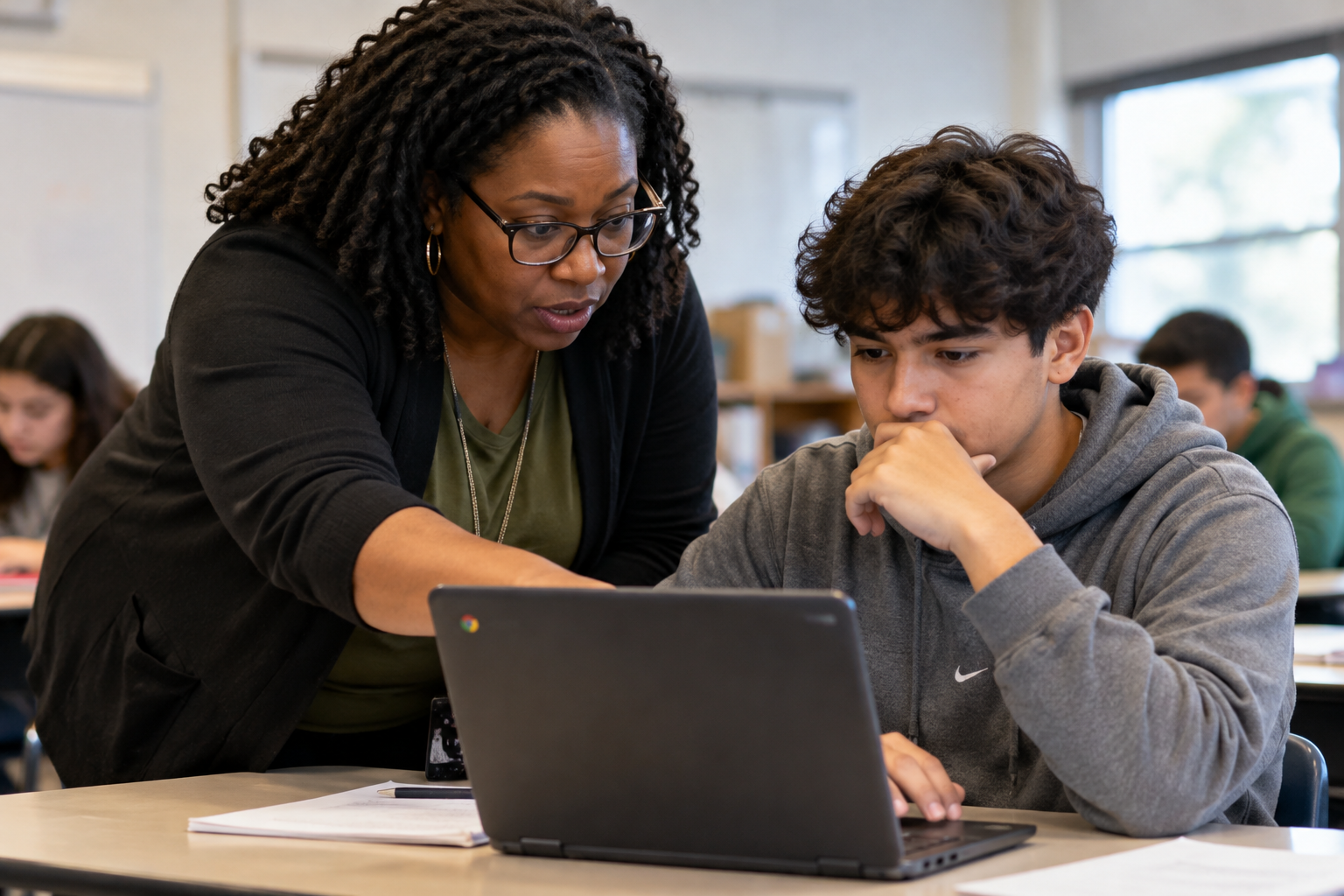
Teachers don’t want to ban technology from the classroom. Instead, they want more input on edtech adoption.
Their mixed views are apparent in a new Gallup-Walton Family Foundation poll. Only 10% of educators strongly agree that digital tools help students learn.
Opinions are largely driven by the distractions caused by technology, which dominate middle and high school classrooms, the data suggests.
Perceptions shift, however, when teachers are included in edtech decision-making. Seven in 10 teachers who gave input—compared to 55% who didn’t—said technology improved learning.
“[W]hen teachers have that input and oversight, they’re more likely to see technology as useful and less disruptive,” said Gallup senior partner Stephanie Marken in a statement.
For district leaders, the report reframes the screen time conversation: Teachers want to vet digital tools, not count minutes of tech use. They also want to monitor how students use devices in the classroom.
How schools are regulating tech
Meanwhile, many districts are tightening edtech policies in response to community-wide backlash. The two widest-ranging/most comprehensive examples come from Los Angeles and New York, where leaders are enforcing strict screen-time and AI restrictions.
The Los Angeles Unified School Districtbanned devices in preschool, kindergarten and first grade. Screen time limits take effect later this year, ranging from 20 minutes a day for second graders to 90 minutes per class per week for high schoolers.
“It’s an incredibly robust and groundbreaking document,” LAUSD board member Nick Melvoin, who introduced the initial resolution earlier this year, told the Los Angeles Times. “It’s going to be the basis for reform throughout the country if not the world.”
Earlier this month, New York City Public Schools banned AI in grades K-8 for the 2026-27 school year. LAUSD also blocked access to AI tools on school-issued devices following New York’s decision.
New York City Public Schools Chancellor Kamar Samuels said the goal is to ensure students develop critical thinking and interpersonal skills before they graduate.
“We’re putting guardrails in place to protect the human connection, curiosity and creativity that help children grow,” Samuels said in a statement. ”We’re standing firmly in our belief that innovation does not mean more technology, and over the next year, we will lead with evidence to make sure technology serves learning—not the other way around.”
The moratorium covers all software that uses student-facing AI. The district also banned companion chatbots for students in all grades. However, teachers can still use AI for lesson planning and other tasks, District Administration’s Matthew Zalaznick reports.
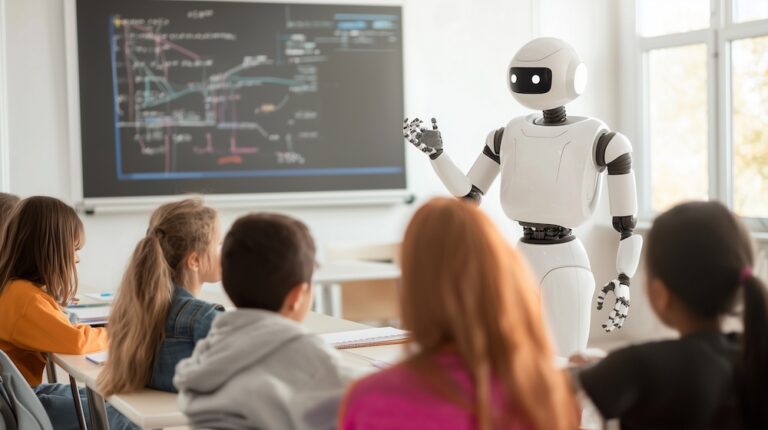
The image above was created with AI.