
Why antifragility is the next evolution of schools post-ChatGPT

Over the past two years, artificial intelligence has moved from the margins of education into the center of nearly every conversation. Districts are experimenting with digital copilots, teachers are exploring new ways to save time, and parents are trying to understand what the rapid acceleration of technology means for their children.
In many ways, it feels like we are building the plane while flying it. Yet if you look closely, AI is not the story. It is simply the accelerant.
The real story is about what kind of district you become when pressure arrives.
In my conversations with leaders across the country, I am hearing a familiar tension: shrinking budgets, rising deficits, staffing shortages, mounting expectations and the sense that volatility has become a permanent feature of our work. Most leaders are trying to become more efficient or more resilient.
But what if those goals are too small? What if the goal is not to endure pressure but to grow because of it?
This is the essence of antifragility, a concept Kelsey Behringer, CEO of Packback, and I will explore more deeply at FETC 2025. Antifragile systems are not simply robust. They do not just withstand shocks. They learn, adapt, and improve through those very shocks. They emerge stronger than they were before.
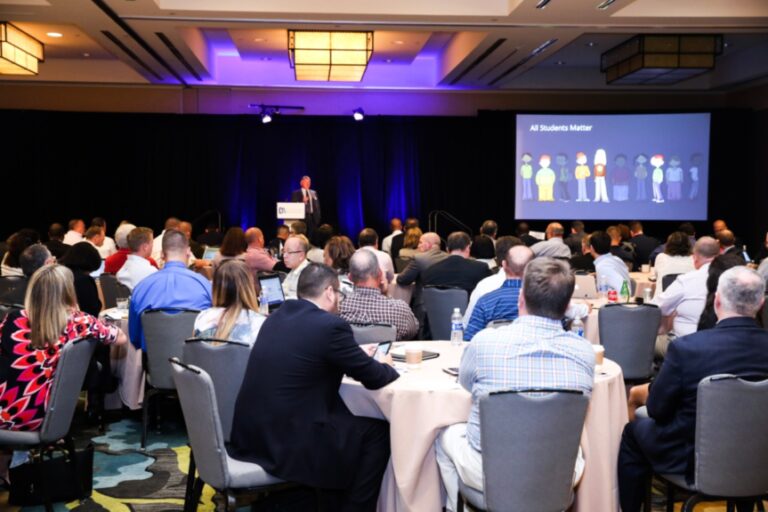
FETC is one of the nation’s most respected gatherings for education leaders who are shaping the future of teaching and learning. It brings together superintendents, CTOs, curriculum leaders, classroom innovators, and industry experts to explore emerging technologies, practical solutions, and real-world applications that help districts grow.
If you are looking for a space where ideas become action and where you can learn from colleagues across the country, FETC is a place you will want to be. You can register for the conference here and join us for this important conversation.
For districts navigating the turbulence of rapid AI adoption, antifragile thinking is not just useful. It is essential.
Why the current moment requires antifragility
Districts rarely break because of one catastrophic event. They break because the systems that hold them together are stretched too tightly: the one teacher who is the entire literacy strategy, the single communication platform that collapses when families disengage, or the new initiative that quietly piles onto the workload until teachers feel buried.
The result is brittleness. Systems perform well when conditions are stable but buckle under disruption. AI simply reveals this brittleness faster.
When educators view AI as a threat or an additional burden, adoption stalls. When leaders roll out tools without protecting capacity or eliminating competing expectations, trust erodes. When districts centralize decisions without empowering campus-level experimentation, innovation suffocates.
The good news is that these same stressors can become catalysts for growth.
AI as a multiplier, not a replacement
The most misunderstood narrative in K12 right now is that AI is here to replace something. Replace teachers. Replace human judgment. Replace curriculum design. Replace relationships.
But districts that are adopting AI successfully are doing the opposite. They are using AI to multiply the capacity of the people they already have.
When used well, AI:
- Reduces the toil that exhausts teachers
- Accelerates feedback loops for students
- Strengthens communication for multilingual families
- Supports novice teachers as they develop their craft
- Frees up human energy for the work only humans can do
These are the beginnings of antifragile systems. Systems that do not collapse when stressed because they have multiple pathways for support, learning and improvement.
The shift: From one big bet to many small wins
One of the most important mindset shifts for district leaders is moving away from the “one big rollout” mentality. Too often, districts adopt AI tools the way they adopt new curriculum platforms: one decision, one timeline, one mandatory implementation.
This is the most fragile path a district can take.
Antifragile districts do something different. They run multiple small pilots. They test ideas at the classroom or campus level. They gather teacher reflections often. They evaluate what works and abandon what does not. They scale tools that reduce stress, not create it.
In other words, they design systems that learn quickly. This is the work that separates districts that survive volatility from those that thrive in it.
Leadership question: Who carries the risk?
Every district has a decision to make in the coming year that extends beyond AI tools or instructional models. It is a question of leadership posture: When things go wrong, who carries the risk?
In fragile systems, the burden falls entirely on teachers and principals. In antifragile systems, leaders step forward first.
They take responsibility for pilots. They frame the narrative. They show up in the rooms of uncertainty. They protect educators from political fallout.
When leaders carry risk with their people, not above them, trust grows. And when trust grows, teams experiment with courage.
This leadership posture will define the districts that make meaningful progress with AI in the next two years.
Looking ahead to FETC 2025
At FETC, we will go deeper into what it truly means to build antifragile districts in a post-GPT era. We will share specific strategies and frameworks drawn from real district examples, including how to:
- Design redundancy and reduce single points of failure
- Decentralize implementation without losing consistency
- Subtract processes before adding AI
- Cap downside risk while expanding upside potential
- How to structure pilots that strengthen, rather than strain, your system
We will also explore how to identify the pressure points in your district where AI can become a capacity multiplier, right now.
The district of the future will not be the most efficient or the most technologically advanced. It will be the district that can adapt the fastest, learn the quickest and turn stress into strength.
This is the promise of antifragile design and the real potential of AI.
I look forward to continuing the conversation at FETC.