

Why colleges of education must now co-own teacher outcomes
The dominant metaphor for colleges of education is a pipeline. Candidates enter, complete preparation, and exit into schools.
The institution’s obligation ends at placement. Success is measured in certification rates and employment numbers.
That model is no longer sufficient. Not because teacher preparation is unimportant—it is—but because the challenges facing American public education have outgrown what preparation alone can address.
Schools are not struggling primarily because educators are underprepared. They are struggling because the systems in which educators work were not designed for the demands now placed upon them. Fixing the pipeline does not fix the architecture.
Higher education leaders have an opportunity—and arguably an obligation—to respond. The question is whether colleges of education will expand their institutional role to meet this moment, or continue operating at a distance from the systems they were built to serve.
New types of teamwork
Most university–K12 partnerships are organized around programs: a student teaching placement, a professional development contract, a research agreement. These are valuable. They are also insufficient for the scale of redesign that school systems now require.
Consider what a more expansive partnership looks like. Arizona State University’s Mary Lou Fulton College for Teaching and Learning Innovation—and the Next Education Workforce initiative housed within it—and Albuquerque Public Schools are engaged in work that begins not with a program, but with a question:
Why do we continue to organize schools as if a single adult, working in isolation, is the appropriate unit of teaching and learning?
Answering it requires rethinking how time is scheduled, how space is used, how educators are deployed, and how schools distribute responsibility for student outcomes.
Universities are positioned to support this kind of structural work, not because they hold the answers, but because they can bring research capacity, cross-sector perspective, and the ability to hold complexity over time in ways that overburdened district administrations often cannot. The key is proximity.
Arizona State’s approach places the university inside the work of school redesign, not above it. Consultants deliver and depart. Co-designers stay, adapt, and share accountability for outcomes.
That distinction separates genuine institutional partnership from transactional service.
Colleges of education must co-own outcomes
Higher education leaders understand infrastructure. It is the broadband that enables everything else, the research computing cluster that powers multiple colleges, the advising system that supports student success institution-wide.
Infrastructure is not glamorous. But when it fails, everything built on top of it fails too.
Colleges of education should understand themselves as infrastructure for the educator workforce in precisely this sense—something more expansive than preparing individuals for entry into the profession.
It means contributing to the conditions under which educators can develop, collaborate, and sustain high-quality practice across a career. It means producing research with school systems rather than about them.
It means convening across sectors to address problems no single institution can solve. And it means pushing, with rigor and candor, on the structures and practices that are not working.
This is a co-ownership model. As David Labaree has observed, colleges of education have historically kept their distance from K12—studying outcomes, reporting on them, preparing the people who produce them, but rarely owning them alongside the schools where they occur.
That distance is no longer defensible. If the educator workforce is in crisis—and by most indicators, it is—then institutions that prepare, study, and convene around that workforce have a responsibility that extends beyond their traditional functions.
Four key investments
Repositioning a college of education as workforce infrastructure requires investment in four areas:
- Sustained presence over episodic engagement. Substantive partnerships are built on ongoing relationships, shared data, and embedded roles, not grant cycles and discrete deliverables.
- Preparation programs that reflect the environments graduates will actually inhabit. If the profession is moving toward team-based staffing models—where educators share responsibility for student cohorts and specialize by role—preparation should not continue to train candidates exclusively as autonomous generalists. Aligning preparation with redesigned schools is not just pedagogically sound, but it is a competitive institutional advantage in attracting district partners, philanthropic investment, and policy support.
- Research designed for use. The traditional hierarchy—university produces knowledge, districts consume it—does not serve system redesign. Colleges of education that want a meaningful role in workforce transformation need networks, practitioner-researcher partnerships, and evaluation frameworks built around shared learning.
- Convening as a core institutional function. Grand challenges in education cannot be addressed by any single institution. Colleges of education are well-positioned as conveners, bringing together district leaders, policymakers, preparation programs, and community organizations. This function is underutilized. For institutions seeking to expand their public purpose, it represents a significant strategic opportunity.
We prepare teachers?
Colleges of education face enrollment pressures and questions about their value proposition that are not going away. The traditional answer—we prepare teachers—is insufficient as a standalone identity when alternative pathways and employer-based preparation continue to expand.
The educator workforce shortage is a structural problem, not a supply problem. The conditions of teaching—professional isolation, flat career trajectories, inadequate support—drive attrition and suppress entry.
Adding more teachers to a system that consumes them is not a solution. Changing the system is. That is work that higher education, at its best, is built to support.
The question is whether colleges of education are willing to become part of the infrastructure required to do it.
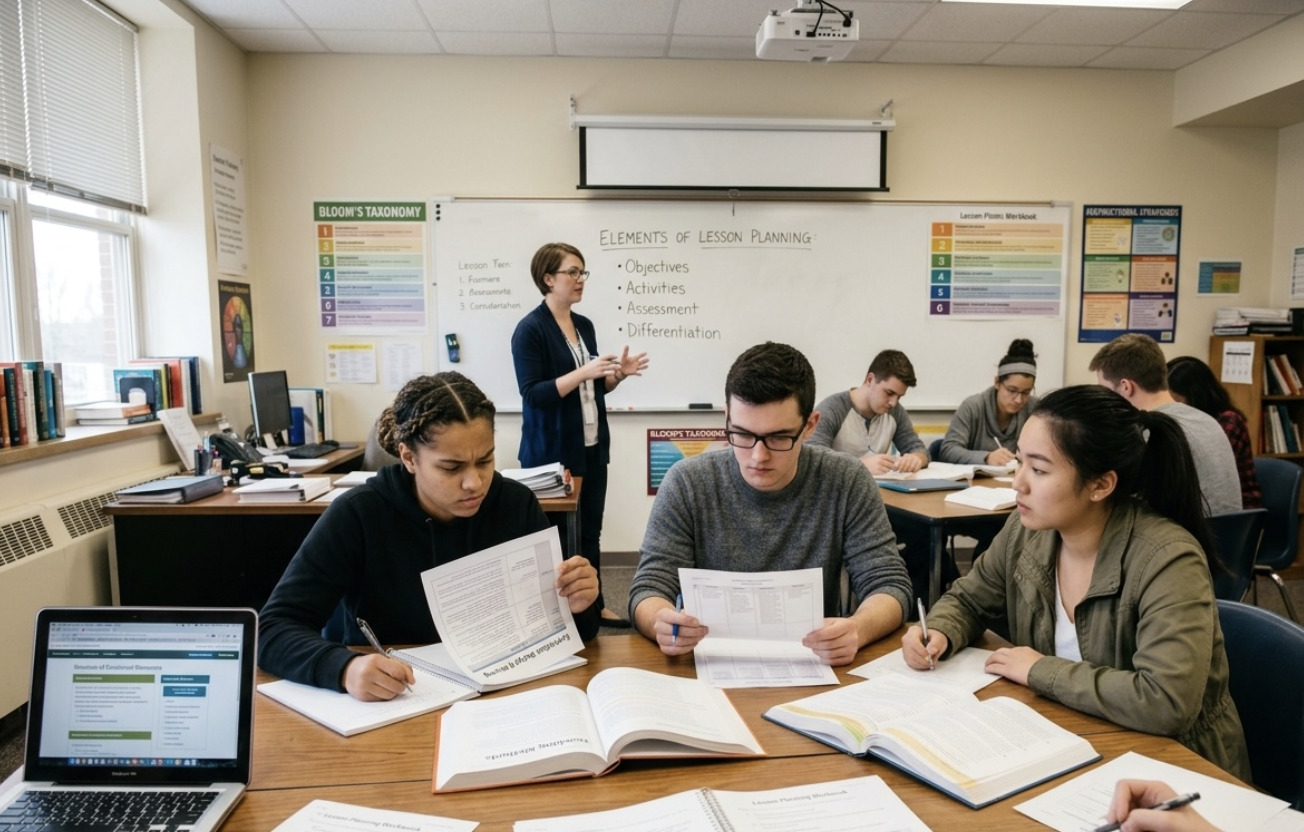
The image above was created by AI.