
Classroom to commissioner: How to thrive at every level of K12

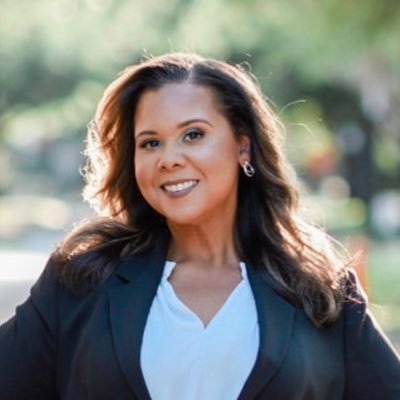
Few education leaders have seen the system from as many angles as Dr. Susan Córdova. As the first Latina to serve as Colorado commissioner of education—and a former classroom teacher, principal, and superintendent of Denver Public Schools—she brings a rare, ground-level understanding of what it takes to move the needle for students at every level of the system.
Córdova will share her insights as a featured guest at the April District Administration Leadership Institute Superintendents Summit in Denver, where district leaders from across the country are gathering to focus on leading with clarity amid rapid change.
In this conversation ahead of the summit, she offers a candid perspective on teacher retention, AI in schools, how to stay grounded when everything feels urgent—and what separates the leaders who truly thrive in chaos from those who simply endure it.
Dr. Córdova, you’ve sat in almost every seat in education—the classroom, the principal’s office, the superintendent’s office, and now the commissioner’s office. Which role changed you the most as a leader?
I’ve learned something fundamental in every role I’ve held. As I moved into roles with greater responsibilities and impact, I’ve strived to carry those lessons with me.
As a teacher, I learned the power of relationships and what truly motivates people. As a principal, I saw how the leader sets the tone for culture, expectations and vision. As a superintendent, I learned the importance of engaging the entire community while staying disciplined in measuring progress and results.
In my current role, I see more clearly than ever how policy influences practice—and how important it is to understand the reciprocal relationship between legislation and the realities on the ground.
The reality is, I’m still learning. Each role continues to stretch me in different ways.
Recruiting and retaining great teachers and leaders is one of the hardest things districts face right now. What are the districts that are getting it right actually doing differently?
The districts getting it right are thinking about the experience of being an educator, not just the transaction of hiring one.
They consistently do a few things well:
- Creating strong onboarding and support systems, especially in the first 2–3 years, when we lose too many people.
- Building leadership capacity at every level, not just relying on the principal to carry everything.
- Designing roles more strategically, including team-based models and differentiated responsibilities.
- And importantly, listening to their educators—and acting on what they hear.
The districts seeing progress are aligning their staffing, professional learning, and culture around a clear understanding. If we want great outcomes for students, we have to create the conditions where adults can do their best work.
If you could change one thing about how superintendents think about their role as a leader, what would it be?
If I could change one thing, it would be this: don’t try to do everything yourself. The superintendency is too complex—and too important—for any one person to carry alone.
Some advice I’d offer is:
- Lean into your strengths. Know what you do well and don’t apologize for leading from that place.
- Build a team that balances your gaps. Surround yourself with people who bring different skills, perspectives, and expertise—and trust them to lead.
- Work closely with your board to keep the main thing, the main thing. When there is clarity and alignment around priorities, it becomes much easier to say no to distractions and stay focused on what matters most for students.
Superintendents don’t need to be everything—they just need to build and lead systems that work.
What separates the superintendents who thrive in chaos from those who endure it?
I am a big fan of Marcus Aurelius. One of his quotes that I love is, “When you are distressed by an external thing, it’s not the thing itself that troubles you, but only your judgment of it. And you can wipe this out at a moment’s notice.”
To me, that suggests we have the power to be in chaos without really experiencing it. We can reframe our responses to the crazy times we live in and lead with a sense of purpose that no one can challenge. The trick is to stay grounded in our purpose and values, no matter what else is happening.
AI is changing everything—what should superintendents be doing about it right now, not in five years? And any thoughts on how you might support superintendents in Colorado as they navigate the world of AI amid a social environment where school technology is in question?
In Colorado, we have partnered with the Colorado Education Initiative to develop the Colorado Roadmap for AI in K12 Education. It emphasizes flexibility and adaptability, as things are changing at an unprecedented pace.
A few things I would encourage:
- Start learning—personally and as a team. Use AI tools yourself. Understand what they can and can’t do.
- Create space for educators to experiment safely, rather than shutting it down out of fear.
- Focus on the instructional core—how does AI support stronger teaching, not just efficiency?
- And be clear about guardrails, especially around student data and ethical use.
Final question: When everything is on fire, how do you decide what actually deserves your attention as a leader? Any tips on how to help superintendents prioritize?
If your answer to these three questions is “yes,” then the matter likely deserves your attention. :
- Does this directly impact students—and how?
- Is this aligned with our highest priorities?
- Should I be the only one working on this?
If not, you might consider delegating, delaying, or even dropping the matter. But, it’s not always that simple.
My advice—or guidance—to superintendents is to be explicit about your top two to three priorities, and then protect them relentlessly. Use them as a filter for decisions, for meetings, and for how you spend your time.
Staying focused on your top two to three priorities is what keeps you focused when everything around you feels like it’s competing for attention. It’s not easy to do, but the payoff can be enormous.