
How today’s superintendents are building engines of community
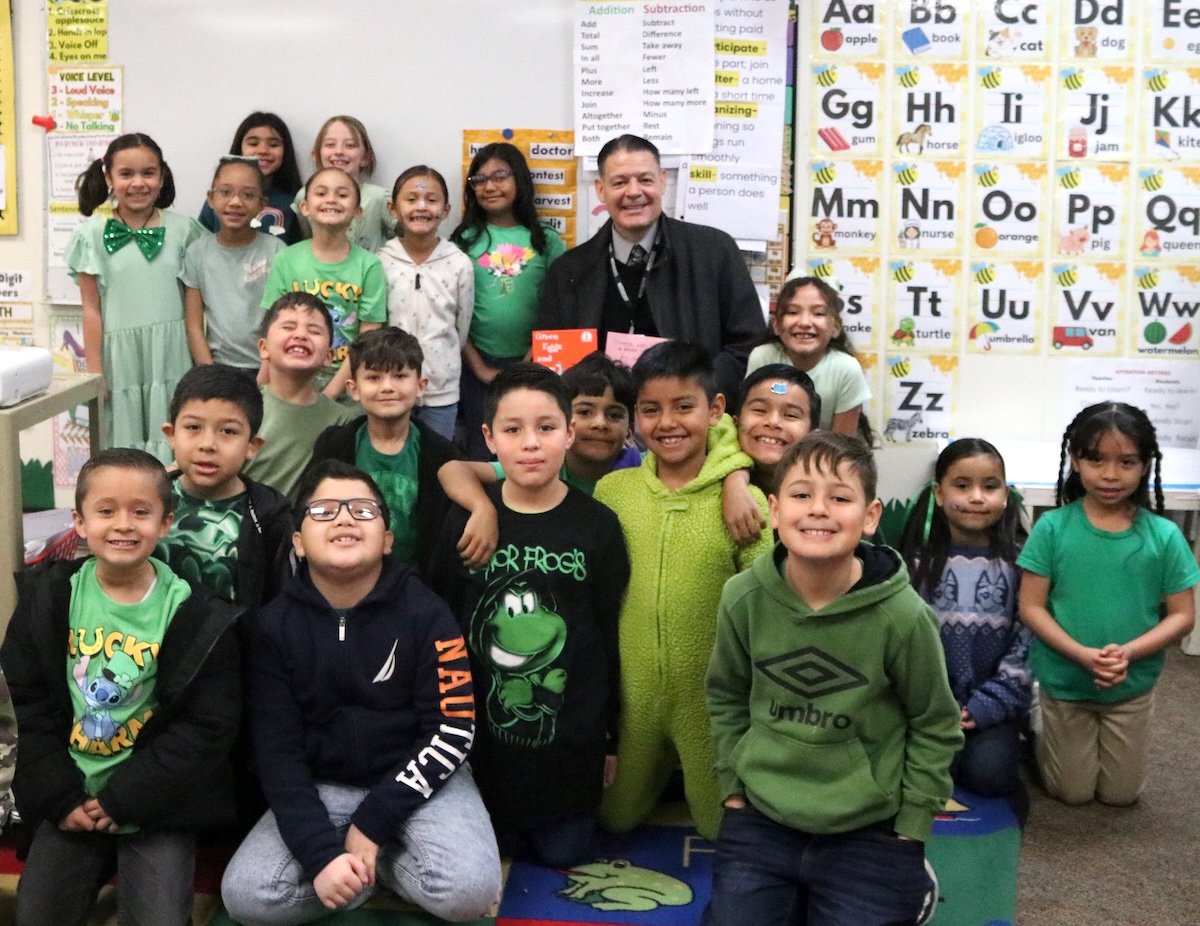
Most families love the schools that their kids attend, and that’s key to building community. Yet, Superintendent John Federline finds himself fighting a national narrative that claims “public education is somehow bad for our communities or bad for kids.”
One of his biggest challenges as the leader of Union Public Schools near Tulsa, Oklahoma, is pushing back against the rhetoric by telling his district’s story of community and achievement. He’s particularly irked by the notion that schools are indoctrinating children.
“If teachers could indoctrinate kids, they would indoctrinate them to do their homework, be respectful, be responsible—all those things are what teachers would love to be able to influence kids to do,” Federline tells District Administration.
“Leadership Lens” is a monthly column featuring the insights of K12 leaders who are navigating common opportunities and challenges. Many of the leaders have participated in the DA Leadership Institute.
Federline also refutes the idea that families don’t have “choice” in public education. “There are opportunities offered by public education that cannot be replicated anywhere else,” he contends.
Building community, including sidewalks
Making the trip to school safer for students is just one way Montana’s Evergreen School District supports families in its small, unincorporated but tight-knit community, says Dr. Laurie Barron, Montana’s 2026 Superintendent of the Year.

Barron and her team are building sidewalks along the main highway to Glacier National Park because the district is only three miles wide and doesn’t qualify for state transportation funding.
“We’re very well known in our area for strong, wraparound, inclusive family support and learning environments,” Barron notes.
About 15% of Evergreen’s 645 students choose to attend from outside the district. About 25% of the district’s students have an IEP, and most of them learn in co-taught classrooms with their peers. Evergreen uses grant funding to employ a community engagement liaison who helps families with literacy support and other services, such as assistance with food, clothing, gas, health care and other essentials.
Over the last two school years, the liaison has connected about 550 families to over 1,200 services. “We’re seeing incredible results in improving attendance and behavior for families connected to those services,” Barron notes. “When kids have food and shelter and physical and mental health care, they’re more likely to show up to school and perform well.”
‘You’re the hub’
During Superintendent David Verdugo’s 35 years in education, the role of schools has expanded far beyond instruction to services such as telehealth and adult education. Santa Cruz Valley Unified School District No. 35 feeds all of its students year-round, for free.
The district also built an aquatic center where, this past summer, more than 600 children learned to swim. It also operates a performing arts center and will soon open an exercise facility.

“In a rural community, you’re the hub, so you try to provide opportunities and amenities for families,” he points out. “I understand my main job is academic achievement, but also my job is to support the community in any way that it needs. That’s the role education has taken upon itself.”
Two hallmarks of Verdugo’s rural, predominantly Hispanic community in southern Arizona are that teachers are still respected and education is still venerated, Verdugo adds.
“Because of our culture here, our community still believes that being a teacher is a high position to hold. So, students are very well supported by families and the community.”
Nurturing the internal community
Retaining high-quality teachers strengthens the community inside the district, says Dr. Stephanie D. Howard, superintendent of Texas’ Midland Independent School District.
In her experience in a smaller district, reducing class size was not the answer to driving student achievement. When she took the helm at Midland in 2023, the district was struggling with inexperienced educators and substitute-filled classrooms.
To tackle retention and student achievement, Howard focused on Midland’s partially implemented “Opportunity Culture” model. The approach extends the reach of highly effective teachers and embeds coaching within small, empowered teams.
Instead of a single instructional coach for dozens of teachers, the model creates grade-level teams led by multi-classroom leaders. These educators split their time between teaching and coaching, building retention by giving new teachers daily mentorship.
The strategy strengthened teacher retention, which led to greater achievements for the district. Midland reduced the number of teachers with five years or less experience from 37% to 35%, which Howard said reflected the value of coaching and new compensation structures—a modest but meaningful reduction.
More than 64 teachers now earn over $100,000, thanks to stackable pay tied to leadership roles and performance, she said. Sustainability, she stressed, was also non-negotiable. Howard sees retention not as a program but as a staffing mindset. “Strategic staffing is a way of doing business,” she said, noting that districts must be creative to meet today’s workforce and funding challenges.
Rhode Island
K12 leaders can set grandiose plans for growth and achievement but success depends on the teachers and staff, says Superintendent Ana C. Riley of Rhode Island’s Bristol Warren Regional School District.

“Teachers are the ones who really make it happen, and so creating a culture in which there’s buy-in and everyone is on board has helped the district grow in its success,” says Riley, Rhode Island’s 2026 Superintendent of the Year. “Even where our scores aren’t where we want them to be, we’ve seen lots of good growth.”
In this tight-knit environment, the district’s high school has achieved its highest state ranking in more than a decade. That sense of “buy-in” also extends to both towns the district serves: voters overwhelmingly approved a $200 million bond to build a new high school.
“That adds to support teachers feel, so it’s not just from me and the principals,” Riley notes. “The community supports their work and wants what’s best for students. All of these factors contribute to this being a place where people feel valued and want to work.”
The regional nature of Riley’s district requires two towns to partner on education. Historically, there had been some “push-pull” between Bristol and Warren but the school committee is now unified around student achievement and staff morale.
“What makes us unique is we continue to grow and bloom, even with all of these outside pressures that are taking a toll,” Riley continues. “I hear it from some of my peer superintendents, where there’s a lot of stress around what’s going on nationally, and I feel like our school committee and our local officials have kept us out of that.”
The district’s new high school is being built on the same campus as its existing high school. Students are participating in the design phase and can now visit the worksite and get some first-hand construction experience. The district is also renovating its other schools, and upgrading HVAC and lighting systems.
“When you freshen up and improve your physical location, that also adds to improved morale and improved culture,” Riley notes.
“The world is filled with negativity, and when you can find a place where there’s lots of positivity, it really makes an impact, and so I’m grateful for the way our students and our staff show up every day and try to make this a great place to live and learn.”
Associate Editor Michelle Centamore contributed to this article.