
This growing network aims to help female leaders thrive

Female superintendents, principals and other educators are coming together to establish a new leadhership network to promote gender equality and inspire more women to thrive in the top K12 education jobs.
A dedicated space where this occurs is the annual Leadhership Network for Women Conference hosted earlier this fall by District Administration and the District Administration Leadership Institute.
“It’s a space where women can feel the freedom to explore the different paths that they might want to take in their educational journey,” says Dr. Candace Castillo, deputy director of academics at the Oregon Department of Education. “It’s also a place to reflect on where they have been in their journey and the areas of opportunity, and then leverage all the different expertise that is in the room.”
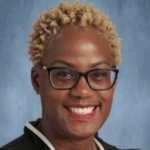
While a large majority of the nation’s classroom teachers are women, more than two-thirds of the superintendents are men, says Linden Public Schools Superintendent Atiya Perkins, speaker at the Leadhership conference. “Clearly there’s a disconnect,” Perkins notes. “Representation matters.”
Perkins brought one of the largest teams of female administrators from her New Jersey district to the conference. The group included her assistant superintendent, several principals and assistant principals, a counselor, a dean of students and even a school board member.
“This is a space where you’re able to be your authentic self and grow because continuous learning is necessary for all of us, regardless of what stage we’re in in life,” Perkins explains. “It’s about our legacy and where we are going because we are in front of the most precious commodity in this world, and that’s children.”
‘So Long, Superwoman’

Female leaders must set aside the idea that they must “do everything right,” says Superintendent Teresa Hill of South Holland School District 151 near Chicago. Hill’s presentation, “So Long, Superwoman,” also covered boundary-setting and personal space.
“That’s hard for leaders to admit that there’s stuff you can’t do or that you don’t know,” Hill points out. “Sometimes there are limits that we have to be aware of, both for our own health and well-being and in the way the system works.”
Female educators continue to battle preconceived notions about their ability to lead districts and schools. The Leadhership Network is a place for women to support each other’s aspirations, she adds.
“This is a safe space to focus on the needs that women leaders have as they navigate a system that wasn’t necessarily created for them,” Hill observes. “There are still hurdles, there are still stereotypes.”
Rachel Edoho-Eket, principal of Waterloo Elementary School in Maryland, presented on how female leaders can make more time for family and avoid the burnout that comes from overwork.
“My message is around how we say ‘no’ in a way that still preserves our relationships,” she says. “We have choices in how we lead and make shifts that will help us serve other people better when we serve ourselves the best.”
Mentorship is leadhership
Perhaps the best way to develop more female educators is to provide them with mentors who are women. “Being in a space with other women, you have some real authentic conversations,” Edoho-Eket points out.
“You can talk about the different roles that we have as not only leaders, but also as mothers, sisters, aunts, daughters, volunteers, philanthropists—just all those different roles and some of the nuances in the work that we do and are expected to do,” Edoho-Eket adds.
Female educators need to hear stories of colleagues who have ascended through educational organizations or their school districts, adds Superintendent Granita Lathan of Missouri’s Springfield Public Schools.
“Sometimes people don’t know what’s available to them because they have not seen it or had the opportunity,” she says.
Educators should partner with their communities to connect female students with mentors, Lathan adds. Businesses and organizations with female leaders help students envision their potential.
Lathan hosts an annual empowerment program that pairs high school students with local female presidents, CEOs and education and political leaders. “They have an opportunity to network and interact and then develop a year-long relationship with those mentors,” Lathan says.
Activating allies
Damien L. Butler, a leadership consultant and administrator who was one of the few male attendees, says more must be done to create opportunities for leaders who have been overlooked. He hopes more male leaders will support the advancement of female colleagues.
“An ally is a person who’s advocating for you when you’re not in the room,” Butler observes. “Change is coming, change is here and those who don’t change are going to get left behind.”
Stay tuned for details on the 2026 Leadhership Network for Women Conference.